Agents — automation attached to routines
An agent is a worker glued to a routine. Start the task and it fires; work, and it listens; finish, and it reports success or failure. It even runs when you redeem a missed check-in.
- 1
Attach to a routine
Every agent binds to one routine — Morning briefing to Wake Up, Evening recap to Wind-down. The routine’s schedule is the agent’s schedule.
- 2
Wire the events
A start event fires when you begin the task, an optional end event when you finish. Point them at any URL — your n8n flow, a webhook, your own endpoint — with {{ goal_id }} substituted in.
- 3
Watch the lifecycle
Idle → listening → finished. The table keeps success and failure counts per agent, so a flaky webhook can’t hide.
- 4
Redeemed check-ins still fire
Check in a missed routine with points and its agents run anyway — automation should not punish a late human.
Agents, in detail
A small fleet, fully auditable — every agent belongs to a routine and answers for its record.
-
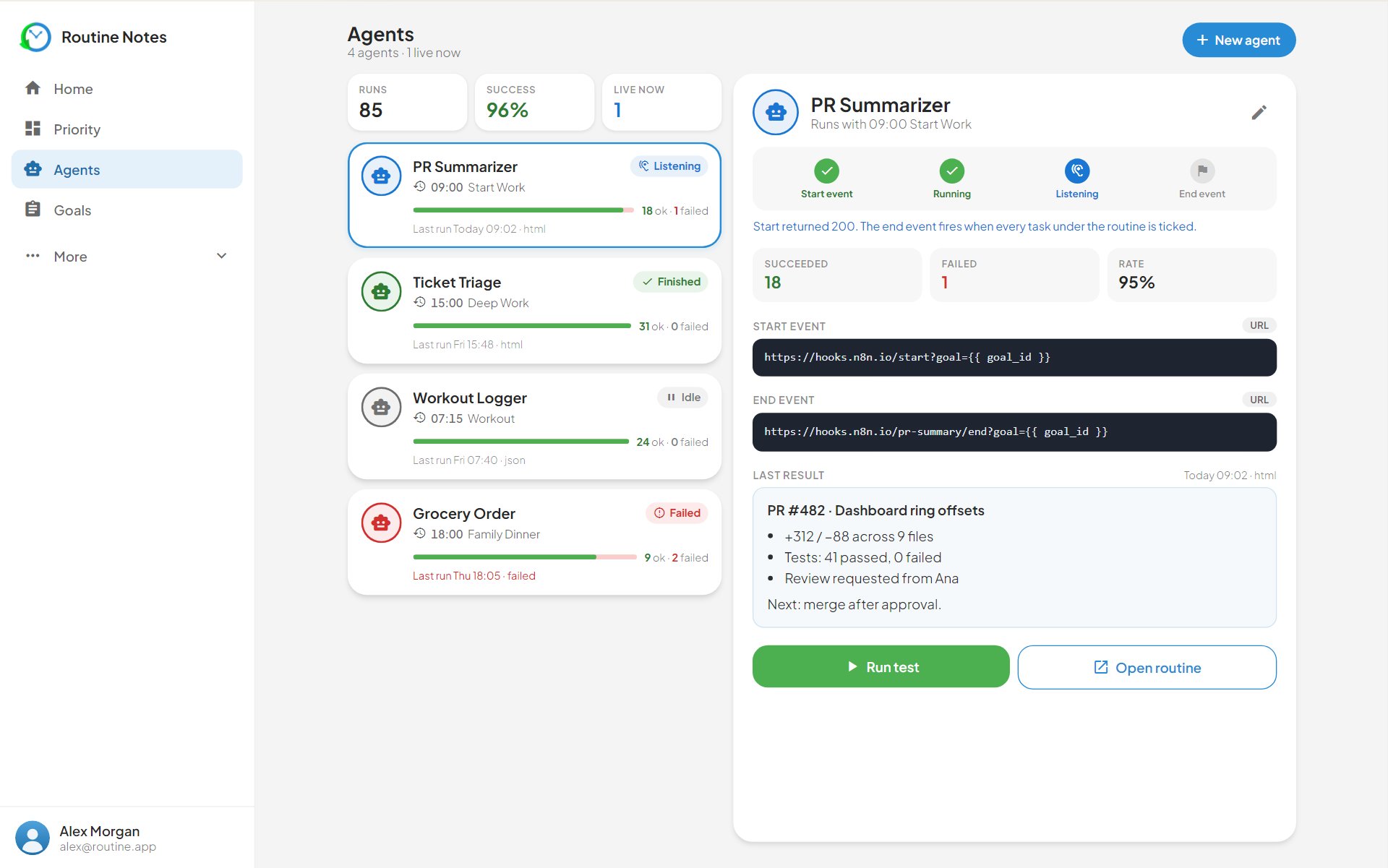
The banner counts your agents, how many are active right now, and their lifetime successes and failures. Below it, the table names each agent and the routine it serves — no orphan automations floating around.
-
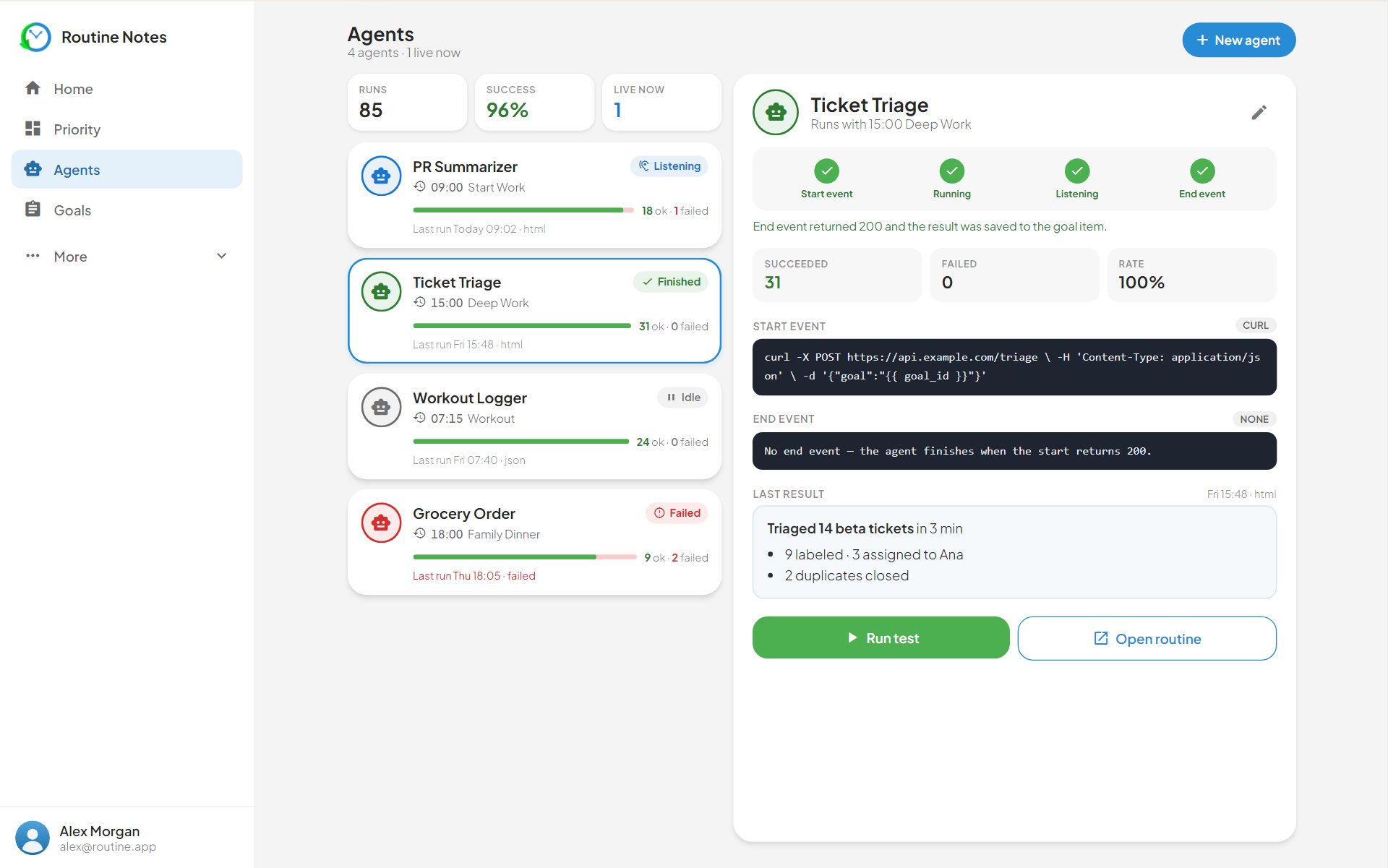
Idle → listening → finished. Each row carries its own success and failure counts, so a webhook that quietly started failing last Tuesday shows up as a number, not a feeling.
-
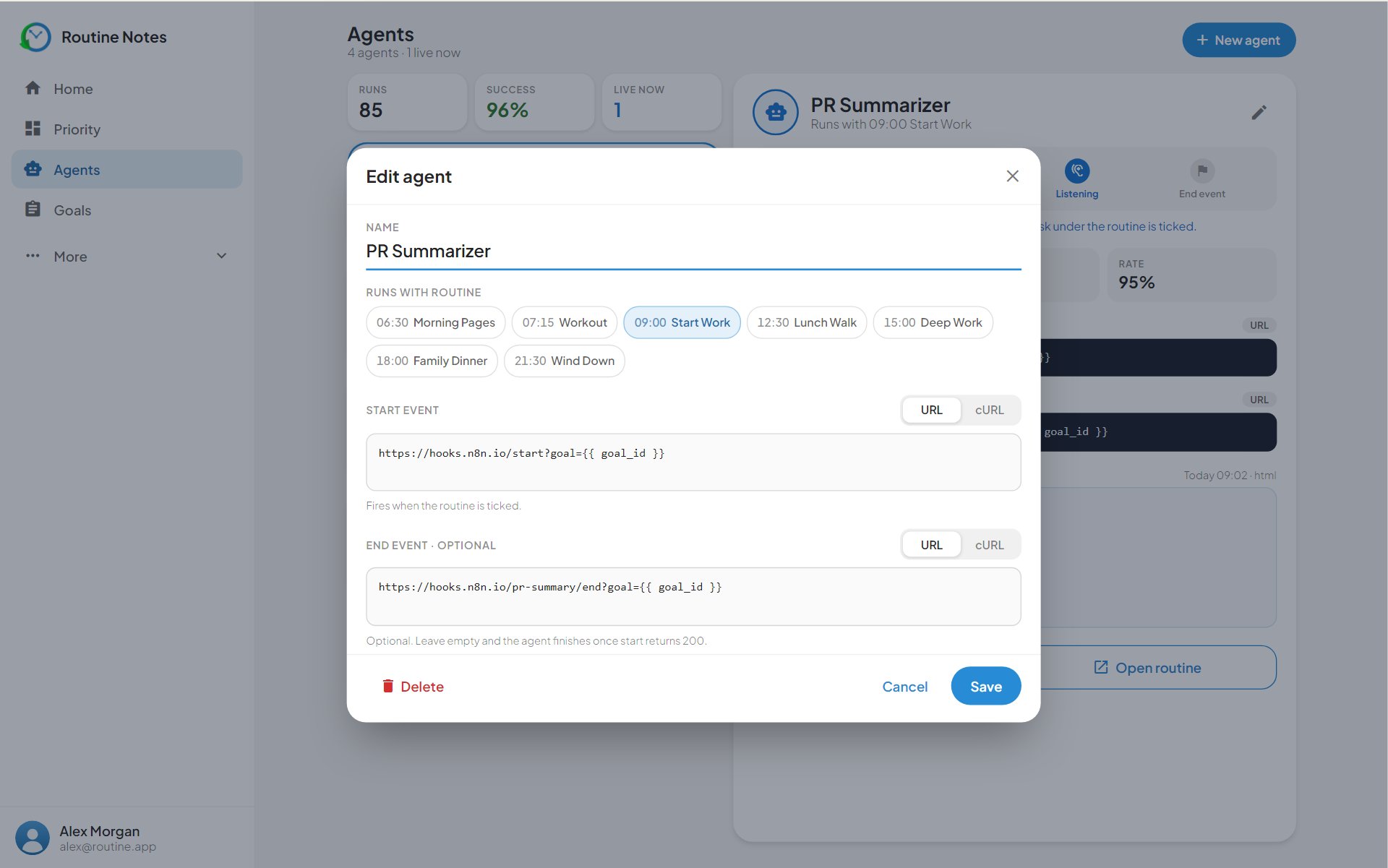
The editor asks for four things: a name, the routine to bind to, a start event and an optional end event. Events are plain URLs — your n8n flow, a webhook, your own endpoint — with {{ goal_id }} substituted at fire time.